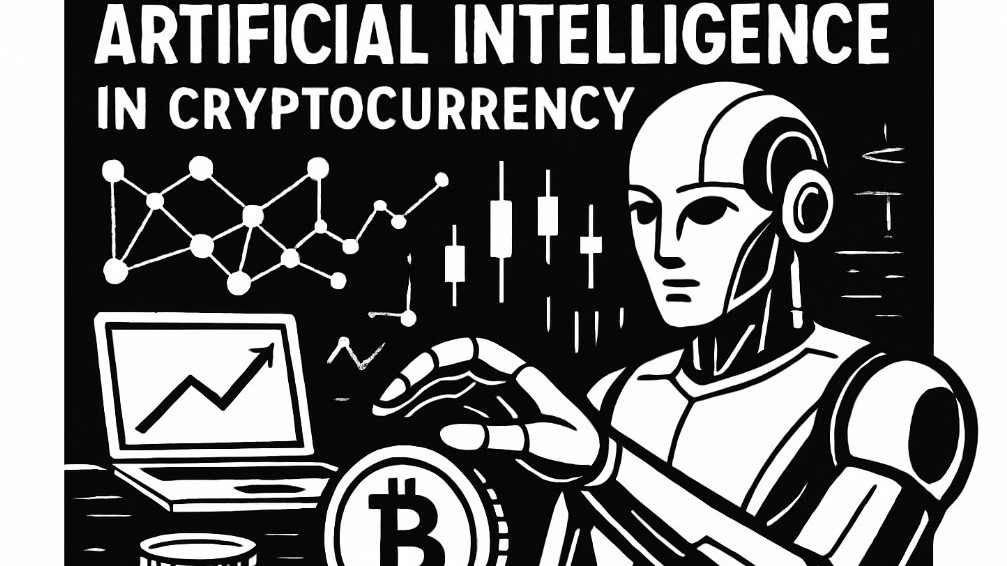
The cryptocurrency market is known for its volatility , rapid price changes, and difficulty in forecasting. In such conditions, artificial intelligence (AI) becomes a powerful tool for traders , helping to automate processes, analyze large amounts of data, and increase trading efficiency. In this article, we will look at how AI can help in cryptocurrency trading through forecasting, trading signals, strategy development and testing, data management, and other aspects.
1. Predicting market trends
AI, in particular machine learning (ML) models, is able to analyze historical data and detect patterns that are difficult for humans to notice. AI algorithms can:
- Analyze price trends: Using neural networks, AI can predict price movements with ranges based on historical data, news, market sentiment, and other factors.
- Process large amounts of data: AI analyzes thousands of variables such as trading volumes, volatility , market indices and even social media posts to predict possible price changes.
- Improve forecast accuracy: Through continuous training, AI models become more accurate over time, adapting to market changes. 
For example , models such as LSTM, TCN, TFT, GARCH, HMM, etc. effectively predict short- and medium-term price movements, simulate volatility , detect local patterns and modes, helping traders make informed decisions.
2. Trading signal generation
AI can generate trading signals – recommendations to buy or sell assets at a certain moment. These signals are based on:
- Technical analysis: AI automatically recognizes graphic patterns (such as "head and shoulders" or "double bottom") and analyzes indicators such as RSI, MACD or Bollinger Bands .
- Onchain analysis: mvrv , number of active addresses, hashrate difficulty , etc.
- Market sentiment analysis: Algorithms process data from social networks such as X to assess investor sentiment (bullish or bearish).
- News reactions: AI can instantly analyze news headlines or statements by major market players to predict their impact on prices.
3. Developing and testing trading strategies
AI simplifies the creation and testing of trading strategies:
- Strategy automation: Algorithms allow you to create complex strategies that take into account dozens of parameters, such as entry/exit points, risk management, and timing .
- Backtesting: AI can test a strategy on historical data to assess its effectiveness in different market conditions. For example, platforms like TradingView allow you to integrate AI for trading simulation.
- Optimization: AI can automatically adjust strategy parameters (e.g., stop-loss or take -profit sizes) to maximize profits and minimize risks.
With AI , traders can quickly adapt their strategies to market changes without spending months on manual testing.
4. Risk Management and Stop Losses
AI helps traders manage risk more effectively:
- Automated Stop Losses: Algorithms can dynamically adjust stop losses depending on market volatility or other factors to protect capital.
- Calculating optimal position size: AI takes into account deposit size, risk level, and market conditions to determine the optimal trade size.
- Portfolio monitoring: AI can track portfolio balance in real time, suggesting rebalancing to reduce risks.
For example, AI-based platforms such as Kryll allow you to create automated strategies with built-in risk management. 
5. Processing big data
Crypto markets generate huge amounts of data, including price charts, trading volumes, blockchain transactions , and social media posts. AI is able to:
- Filter out noise: Algorithms filter out irrelevant information, focusing on key signals.
- Analyze blockchain data: AI can track large transactions (so-called "whale movements") on the blockchain , which often affect prices.
- Integrate alternative sources: AI analyzes unstructured data, such as posts on X or Reddit , to detect community sentiment.
6. Trading Automation
AI-powered derivatives trading bots allow you to automate the entire trading process:
- Trade Execution: Bots can instantly execute trades based on given parameters, eliminating delays associated with the human factor.
- 24/7 operation: Crypto markets operate 24/7, and AI bots can trade continuously, reacting to changes even at night.
- Multi-currency trading: AI can simultaneously analyze and trade multiple cryptocurrencies , optimizing profits.
Popular platforms such as Binance or Bybit offer APIs for integrating AI bots, making automation accessible even for beginners. 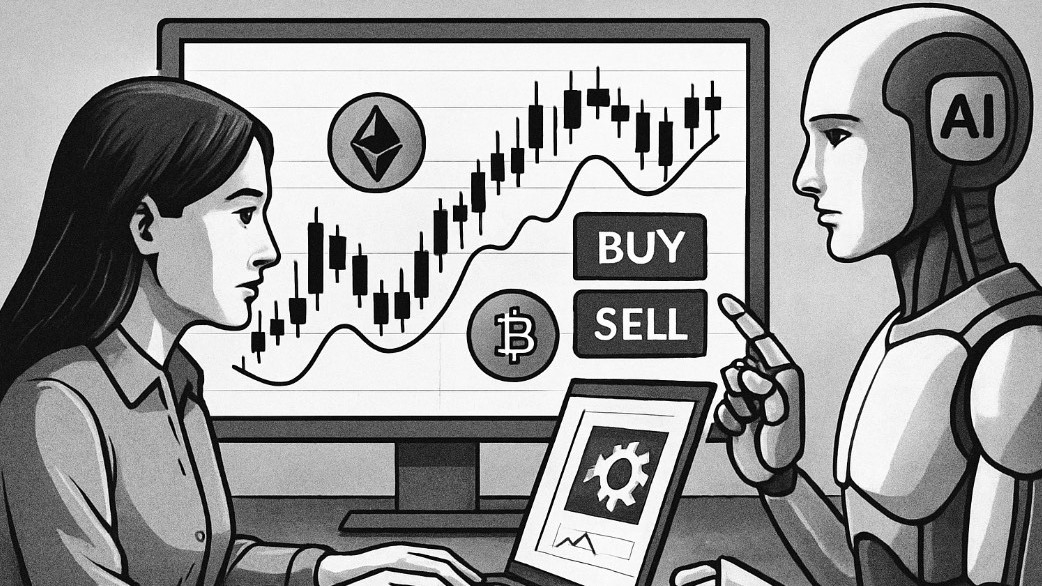
7. Personalization and learning
AI adapts to the individual needs of the trader :
- Personalized recommendations: Based on the trading style ( scalping , long-term investments or arbitrage), AI offers optimal tools and strategies. -
Trader education: AI platforms such as TradeSanta can provide educational materials or recommendations for beginners, helping them avoid common mistakes.
8. Fraud and anomaly detection
AI helps protect traders from fraud:
- Monitoring suspicious activity: Algorithms can detect market manipulations such as " pump and dump ".
- Exchange Security Analysis: AI assesses the reliability of trading platforms by analyzing reviews, hack history, and other data.
Challenges and Limitations
Despite the benefits, using AI in cryptocurrency trading has its challenges:
- Data quality: AI depends on the accuracy and completeness of data. Incorrect data can lead to erroneous predictions.
- High cost: Developing or using advanced AI systems can be expensive, especially for individual traders .
- Risk of over-automation : Relying solely on AI can lead to loss of control over trading, especially in the face of unpredictable market events.
Conclusion
Artificial intelligence is revolutionizing cryptocurrency trading by providing traders with tools for forecasting, automation, risk management, and data analysis. From generating trading signals to testing strategies and trading around the clock, AI is making the market more accessible and efficient. However, success depends on the right use of technology, quality data, and understanding market risks. For traders who want to stay competitive, AI is becoming an integral part of their arsenal.
How does artificial intelligence help in the world of cryptocurrencies?